How to Fix Your Slice – Causes, Fixes & Tips to Never Hit a Slice Again

A slice is sort of a right of passage for all golfers; you either can get through it or you don’t.
The most common miss in golf is a slice. I’ve been there; I know how frustrating it can be to watch the ball take that dreaded turn.
Learning how to correct a slice in golf is not always an exact science.
Some golf professionals and experts will tell you to change your grip, others your stance or your swing plane. I can tell you that if you want to stop a golf slice, you need to know the cause.
I’ll take you on a comprehensive journey to correct your slice, exploring why you slice the ball and some tips to ensure your slice is truly gone.
Contents
How to Fix a Slice? (Key Takeaways)
If you don’t have time to read my entire guide on how to fix a slice, here are some of the key takeaways that you will need to get this motion down.
- An open clubface at impact causes the slice; you will need to determine what part of your golf swing is causing the clubface to stay open through the impact position.
- Always check your grip position and setup first to ensure that they are not the causes of your slice; these are simple fixes.
- You can learn to control the clubface of your golf club by working on wrist control and motion.
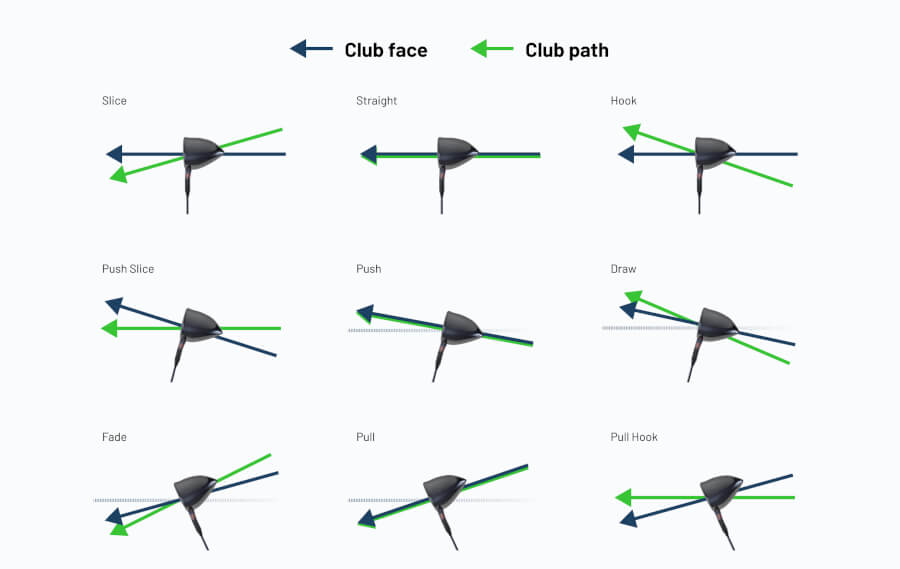
- Focus more on the clubface angle than the path; almost all of the shot direction is controlled by the clubface angle at impact in relation to the swing path.
- Slicing a driver is more common than slicing an iron because of the length of the club and the timing and tempo required to square the clubface. If you have fixed the slice in your irons, keep working through the methods below to get the driver straightened out.

Use our FREE guide to master your wrist angles and consistently hit straight shots with ease!
What Causes a Slice in Golf?
A slice is caused by a clubface that is open at impact in relation to the swing path. Most golfers think that their slice is caused by their path alone.
That’s not true.
If your path is a little steep, but your clubface is square, you may not see a slice but instead a fade or, for some talented players, a straight shot.
Golfers that slice the ball don’t have the clubface control that they need. This lack of control causes a slice.
Here are a few of the reasons why you could be lacking that control to hit a straight shot:
- Poor grip and hand positioning: a grip that is too weak can cause you to slice the ball.
- Incorrect setup and posture: setting up with your feet on a line that is not square or standing too close to the ball can cause a slice.
- Mental misconceptions of what the golf club does at impact.
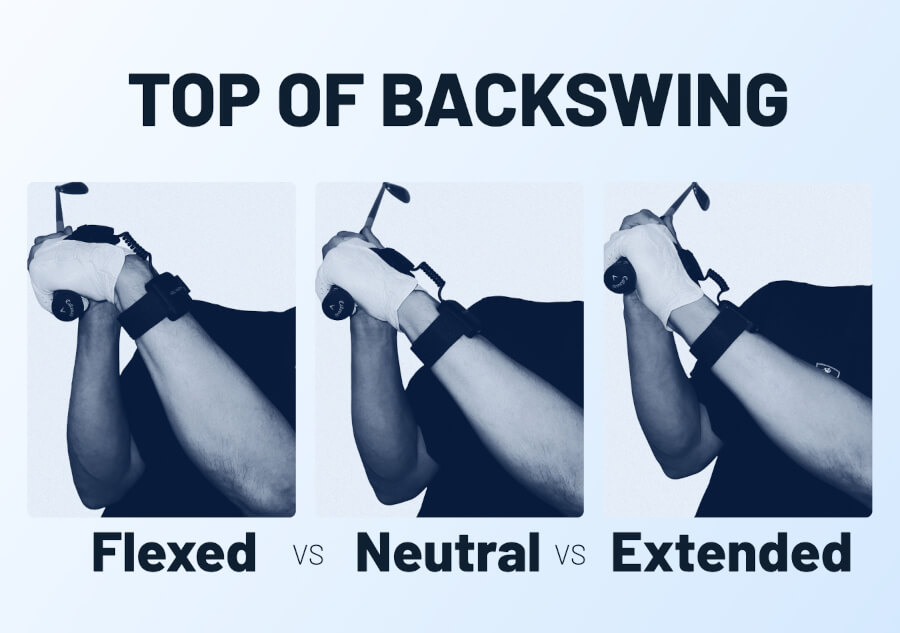
- Incorrect wrist position in the backswing, specifically too much extension or cupping in the lead wrist.
- Failure to release the golf club and improper wrist rotation in the downswing.
- Poor weight distribution at set up with more weight on the right side and difficulty with transferring it to the left.
- Incorrect equipment: improper shafts, lie angle, and even club length can lead to a slice.
Poor Grip and Hand Positioning
A grip that is too weak can cause you to slice the ball. The hand position must be correct for both the left and right hands.
Incorrect Setup and Posture
Setting up with your feet on a line that is not square or standing too close to the ball can cause a slice.
Setting up with poor posture or positioning is a quick fix and can have you hitting the ball straight again rather quickly.
Mental Misconceptions of What Impact Should Feel and Look Like
Do you know what impact looks like with a driver? How about with an iron?
Some golfers are still struggling with what this looks like, and you need to have a clear picture in your mind to be able to square up the clubface.
Incorrect Wrist Position in the Backswing
Wrist positioning is huge when it comes to slicing the golf ball.
If your wrist is cupped, it opens the clubface up. Some golfers can’t even feel they are doing it, but I have a solution for that.
Failure to Release the Golf Club
As the golf club moves through impact, it turns over from open to square to closed.
The timing of this is essential, and that rolling of the forearms needs to happen if you want to get rid of the slice forever.
Poor Weight Distribution at Set Up
As golfers, we are learning more and more about weight positioning at impact and how it changes the clubface angle.
Yes, your weight transfer through the golf ball can have a major impact on the angle of the clubface!
Incorrect Equipment
This is the one everyone hopes for!
If you aren’t playing with the correct shaft and clubhead for your golf game, it can cause you to slice the ball.
Of course, this is not the most common of the slice causes, but it indeed happens.
These causes can lead to the open clubface at impact and a slice. With each of my fixes to a slice, I’ll let you know which cause they match up with so you can get to curing your slice quite a bit faster.
Why is a Slice Bad?
If you are here looking for a fix to your slice, I likely don’t have to tell you what makes this shot so bad.
However, you would be surprised how many golfers decide to just stick with the slice and aim down the left.
Don’t do this.
Inefficient
Golf slices are inefficient. The quickest way to get around the golf course is the straightest line from the tee to the green.
The slice is not the fastest way to get to the hole.
We talked with Hank Haney about how to become a better player. His very first suggestion was to eliminate a player’s big miss. The big miss is the one that puts you out of bounds and makes a par or sometimes even a bogey impossible.
Take a look at this Hank Haney video to gain valuable insight on how to fix a slice.
Loss of Power
Slices cause you to lose power. That extra turn your golf ball makes to the right costs you the distance that should be moving you forward (closer to your target).
Mental Impacts and Confidence
I won’t say the slice is bad as a shank when it comes to your confidence level, but there are still mental impacts to slicing the golf ball. If you stand over the ball and feel like you know it’s going right, it’s a problem.
Let’s not forget that slicing the ball also leaves you shopping for new golf balls way too often!
How to Stop Slicing Driver and Irons: Complete Guide to Fix Your Slice
Ok, now we have the causes and the reasoning behind why the slice is bad for your game.
Let’s jump into the fixes.
Remember, I said that the most critical part of fixing a slice is starting with the cause. Each fix below can be matched to a cause.
Grip Position Made Stronger or More Neutral
If the cause of your slice is related to a grip, it’s likely because your grip is too weak. Strengthening a golf grip can help correct a slice.
Start by looking at the position of your left hand. If your left hand is turned too far to the left (right-handed golfer), it is a weak position. Turning the hand just slightly more to the right can fix this.
When you correctly set your left hand on the club, the right hand can easily get into position.
Making a golf grip stronger will almost always feel as though you are getting your right hand to be just a little more under the club.
This position of the right-hand makes it easier to turn the face over and square things up.
Word of caution here.
Golfers love to exaggerate a grip fix. If you make your grip too strong, you will hook it. Grip adjustments are small, move your hand over just a quarter to half an inch, see what it does, and then go from there.
Stop Aiming Down the Left
In the middle of a round, when the slice starts to creep up on you, I understand it may feel like the right choice to aim down the left side.
Did you know that sometimes aiming down the left makes your slice worse?
When you continue to aim down the left and try to muscle the ball so that it doesn’t turn right, chances are your feet, hips, and shoulders are no longer in line.
Start aiming down the middle.
We have to fix your slice another way, and surprisingly you may find out that the fix is much simpler and easy to understand when you have a square and balanced setup.
Use alignment sticks to get your feet, clubface, hips, and shoulders all started on the same line.
Now your brain has some idea of what the path is and when it would be appropriate to square the clubface up.
Without these lines and positions, it’s kind of a guessing game.
Learn what Impact Feels and Looks Like
Clubface control seems like a foreign concept to many new golfers.
However, if you can learn to picture what impact looks like, you are partially on your way to hitting straighter shots.
Visualization is a big part of golf, and many amateur golfers don’t know what impact looks like.
In addition, until you have learned what it feels like to hit a golf driver or irons with a square clubface, you may not know how to repeat it.
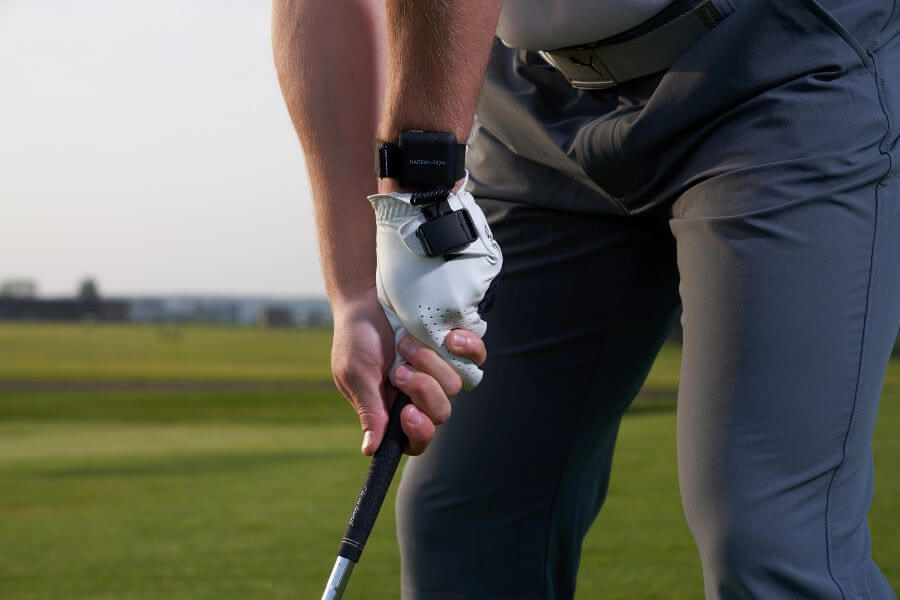
Using golf feedback tools like HackMotion can help you get an idea of what proper impact feels like.
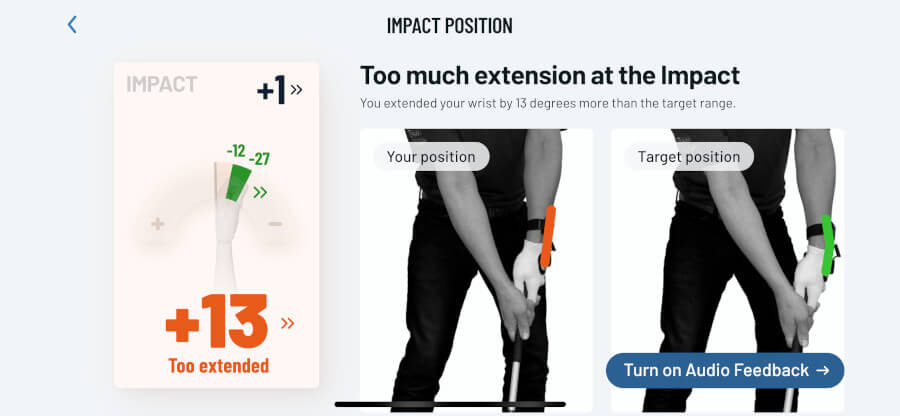
When learning to fix a slice with irons, always start with a short iron and work your way through the bag. The shorter clubs can make it a bit easier to square the clubface.
When working on fixing a slice with a driver, make sure you know how to hit a ball straight with the irons and then work your way up.
The longest club in the bag will be the hardest to hit straight.
Use HackMotion to Fix Wrist Positioning
Did you know that the clubface on your golf clubs is controlled by your wrist position?
Many golfers work on keeping their wrists out of the golf swing; after all, there are times when hands and wrists create issues with power and consistency.
However, there are certain positions in the swing where the wrists need to be in the perfect location. These positions are challenging to find and to feel on your own.
That’s where HackMotion comes in.
HackMotion audio feedback can teach you to keep your clubface a bit more closed by flexing the lead wrist. The great thing about this motion is that in addition to getting the clubface square, it will also shallow the club.

One of my favorite things about HackMotion is the way it can sort out a variety of swing issues simply by getting the wrist in the right position.
Once your clubface is square or closed (like the professionals), you can rotate your body and create more power.
You need to close the clubface and hit with a more in-to-out club path. To do this, you need to flex the lead wrist – it will close the clubface and shallow the club.
HackMotion knows the wrist extension that a tour player has at the top of their swing, compared to their setup. That same ratio is applied to you when wearing the HackMotion.

As you swing through, you can use the audio feedback feature to hear when your wrist position needs to be adjusted.
When learning to fix your slice, no other tool gives you a fix while you are in the middle of your swing.
Stop Getting Steep
There is a misconception in the game of golf that your club getting too steep in the backswing causes a slice.
This is not the case.
Although a steep golf club can make it even more difficult to square the clubface up, the open clubface at impact is the ultimate cause of the slice.
However, steep golf swings are one of the most common mistakes for amateur players.
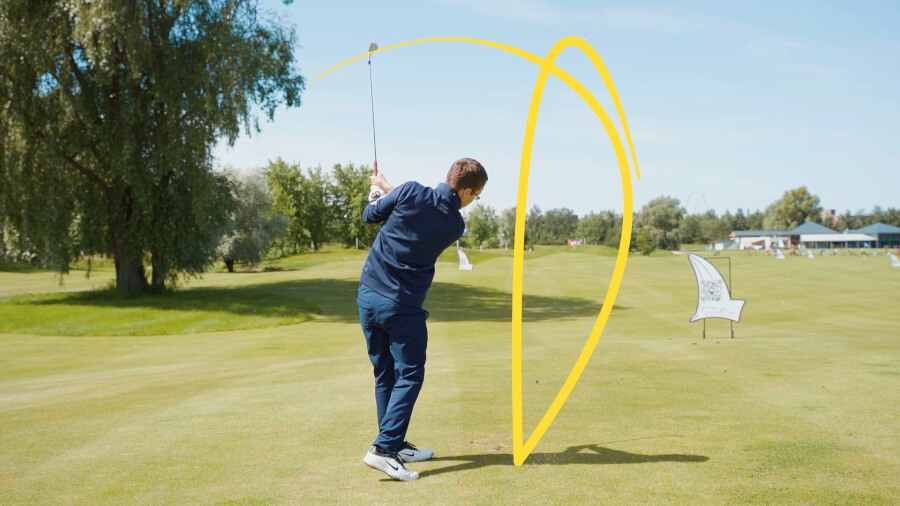
For golfers looking to fix a slice forever, a proper swing path with more of an in-to-out motion will help give you time and the body positioning to square the clubface up.
One of the best ways to avoid getting steep is to take the club back a little lower and slower.
Sometimes within the first few movements of the golf swing, you are already on a steeper path making it impossible to recover.
Learn to Release
Do you know that feeling when you flush a drive?
The ball goes right down the middle, further than it usually does; your hands feel as though they have entirely rotated, and you are just watching the ball from your front foot.
You can’t do that without releasing the golf club.
For amateur players, the release can seem like a foreign concept as it certainly needs to be learned.
However, the good news is that releasing the golf club is very similar to what happens when you hit a hockey slap shot, shoot a three-pointer, hit a forehand in tennis, and even throw a baseball.
The problem is that this release motion just feels different in golf.
As your arms transition from the backswing to the downswing, they start to turn over and rotate. This rotation helps to square the clubface at the perfect time to strike the golf ball.
HackMotion is a tool that can teach you the correct release position by getting your wrist into the right location.
Releasing the club takes a little more work with the driver, but it can also be easier to feel as it is a more exaggerated movement.
One of my best tips for learning how to release a golf club is to ensure you don’t lose any speed while you work on this aspect of your game.
f you start slowing down your downswing to get to the right position, you will likely leave the clubface open.
Keep your speed; just rotate the arms through impact.
Fix the Weight Distribution
One of the most interesting things we are learning about the golf swing in the last few years is the impact of ground forces in the swing.
Golfers that can learn to utilize the ground see much better results regarding consistency and power.
To utilize the ground correctly in your golf swing, you need to fix your weight distribution at impact.
Not only should weight be balanced (for the most part) between the left and the right foot, but you must pay attention to how it is balanced from heel to toe.
When your weight is on your toes at setup, it becomes very easy to get the club steep and the clubface more open.
In addition, if your weight moves to the toes as you take the club back, expect to struggle with the clubface position.
You will be amazed at how a little change to where your weight is set up can profoundly impact your golf clubface angle.
Fixing the weight distribution can also help golfers that are working on fixing a hook.
Go In for an Equipment Check Up
Having played the game of golf for 30 years, I can tell you that equipment is incredibly important.
However, for most players, the cause of the slice is not the equipment they are using.
I can take almost any golf club and apply the principles I know about the game, releasing the club, proper wrist position, etc., and hit a straight shot.
There are clubs out there that make it easier for me to consistently hit a straight shot, and those are the ones I play with.
Once a year or once every other year, go in for a club fitting where you can test equipment and compare it to your own.
Maybe you try a new golf driver that has considerably lower dispersion rates. This is entirely possible.
Ultimately, the proper positioning of your body, wrists, and weight will help you get rid of the slice forever.
How to Practice to Fix Your Golf Slice
Now you have all the tools you need to stop slicing a driver and irons. The next step?
Practice!
Yes, to hit a golf ball straight, you will need to practice. It’s just an unfortunate truth of the game of golf.
Here are some of our best tips to practice fixing your golf slice.
- Always use golf alignment sticks on the ground so you have an idea of what square looks like; this will avoid issues with incorrect aim, alignment, and setup.
- Use biofeedback technology on HackMotion to get the information you need in real-time to make the proper wrist adjustments in your swing.
- Learn to fix the slice in your irons first; remember, the shorter the golf club, the easier it is to release it.
- Practice fixing your slice on a consistent schedule, one quick session at the range probably didn’t eliminate your slice forever; keep working on the slice fix, as it can take a little while before this fix works out on the golf course.
- If you are working on fixing a slice without taking golf lessons, have a friend video your swing so that you can get to a quicker solution; matching the cause with the fix is your best bet at hitting the ball straight.
Take control of your golf game by learning wrist mechanics with our FREE online resource.
Drills to Fix a Slice
Now that you have the information necessary to fix the slice, here are a few of our favorite drills to practice.
Slow Motion Swing Drill
Even Hank Haney agreed that taking slow motion swings is one of the best ways to work on clubface control and fix the slice. Add some slow motion swings to your practice routine where you really see what it takes to square the clubface at impact.
Gradually start to increase the speed and get the feeling down, and then when you have confidence, go back to full speed on all your swings.
Inside Path Drill
The clubface being square at impact is the most important fix for your slice. However, the path can play into this a bit, so it’s important to have the club on the proper path.
When practicing, take a tee and place it just outside the target line, slightly behind the ball. The goal is to hit the golf ball from this inside path and avoid hitting the tee on your downswing. To do this properly, you will need to have a flatter lead wrist at the top of your backswing.
In order to make this happen, you will have to turn and rotate your upper body.
Clubface Control and Rotation Drill
Eric Cognoro talks about what it takes to really become a better golfer. Eric focuses on proper grip, wrist angle at the top, and the rotation of the arms on the way through. All of these things can be measured with HackMotion.
However, as Eric explains, it does take time on the driving range to implement these things into your game.
FAQs
Here are a few of the most commonly asked questions about how to fix your slice.
Why do I slice my driver but not my irons?
A driver is considerably longer than an iron and therefore takes a little more effort and better timing to release it.
The driver slice is also quite common because of a golfer’s natural ability to want to try and hit the driver far and ignore the correct positioning of the wrists.
What about the left-handed slice?
When golfers that are left-handed slice a golf ball, the ball travels straight and then make a turn to the left. This left-handed slice is just as common as a right-handed slice and can be fixed the same way, but squaring the clubface at impact.
What is the best way to fix a slice?
The best way to fix a slice is to use HackMotion, specifically the biofeedback tool that HackMotion has created for golfers.
With HackMotion, you can fix your slice as it is happening and train your brain to get to the proper impact position.
Why do I slice when I swing hard?
When swinging hard, you often struggle to release the hands and square the clubface up.
In addition, many golfers that swing hard have the club in a poor position during the takeaway.
Golfers with the correct positions and timing swing as hard as they want and still hit the ball straight.
Can a golf club fix a slice?
A golf club can make a slice less consistent or turn a slice into a fade, but as golfers, we must learn to get the club square at impact, regardless of what club is in our hands.
Can I fix a slice without a golf lesson?
A slice can be fixed without a golf lesson, using tools like HackMotion and studying the proper golf swing sequence.
Conclusion
Fixing a slice may seem like a big project, but it’s entirely possible.
Get out there and start working on squaring the clubface up. Using a tool like HackMotion will help get you there considerably faster. The quicker you can learn to straighten your slice, the quicker you can move to other areas of your game that need attention.
Golf progress never ends, but the slice is one of the most important hurdles to get over.