Practice Like a Pro: 10 Tips to Maximize Your Driving Range Practice

Did you think you could get better at golf by standing on the range and hitting hundreds of golf balls?
Unfortunately, you could hit millions of golf balls and not get much better.
As annoying as this may sound, knowing how to practice at the driving range is much more important than simply spending time at the driving range.
I’m a practicer, I love spending time on the range, and I’ve developed some strategies to help maximize the time that I spend there and ensure that it gets me to the next level.
I’ll share those tips with you and answer some general questions about practicing so you can start improving this area of your game.
How to Practice at the Driving Range (Key Takeaways)
Don’t have time to read my entire guide on how to practice at the driving range, here are the key points to remember.
- Take your time and slow down between shots; this is not a rapid fire sporting event.
- Use golf technology and training aids like HackMotion to speed up the process of learning how to play.
- Choose a variety of targets, and hit a variety of shots.
- Play the course in your mind as you practice.
- Don’t leave the short game out; putting and chipping practice is just as important as the full swing!
Contents
- 10 Tips for Better Driving Range Practice
- Plan Your Practice Session
- Get Your Body Ready to Practice
- Start With a Short Club
- Don’t Forget About Feedback Tools
- Add Steps to Your Practice
- Pick a Target – Change the Club
- Pick a Club – Change the Target
- Play the Course at the Range
- Use Technology to Help Improve Your Session
- Always do the Pre Shot Routine
- FAQs
- Is the driving range good for practice?
- How long should you practice at the driving range?
- What should you not do at the range?
- Why is it easier to hit at the driving range?
- How many balls should I hit at the practice range?
- How do you practice effectively at the driving range?
- What should a beginner practice at a driving range?
- How often should I practice at the driving range?
- What clubs should I practice with at the driving range?
- Final Thoughts

10 Tips for Better Driving Range Practice
Plan Your Practice Session
If you are heading to the driving range, there must be some reason behind it.
What are you attempting to work on? Do you have an issue with your game, or are you trying to improve a specific skill?
Whatever you are looking for, make sure you have it set in your mind before you head to the range.
I have found that the smarter I am about directing my practice and thoughts, the easier it is for me to improve my session at the range.
Planning doesn’t have to be a long, drawn-out process.
Simply choose what your goals are, and then structure your session around them.
Most of the time, I work on a new skill or swing issue first, and then I follow up with specific skill practice, like shots under 100 yards or hitting a fade and draw with a driver.
Get Your Body Ready to Practice
Jumping out into the driving range booth and touching your toes twice isn’t getting your body ready to practice.
In fact, you are not even close.
Getting your body ready to practice includes making sure you are hydrated, your muscles have all been warmed up, and it certainly doesn’t hurt if you can get your heart rate elevated a bit.
Dehydration can be a major concern for golfers.
Standing on the driving range in the middle of the summer usually means a lot of sun exposure and the potential for dehydration.
Drink some water before your session, and bring a water bottle while practicing.
Do a variety of stretches to make sure your arms, neck, shoulders, back, legs, and even your wrists are warmed up and ready to hit.
Stretching can significantly reduce the chance of getting injured at the driving range.
Start With a Short Club
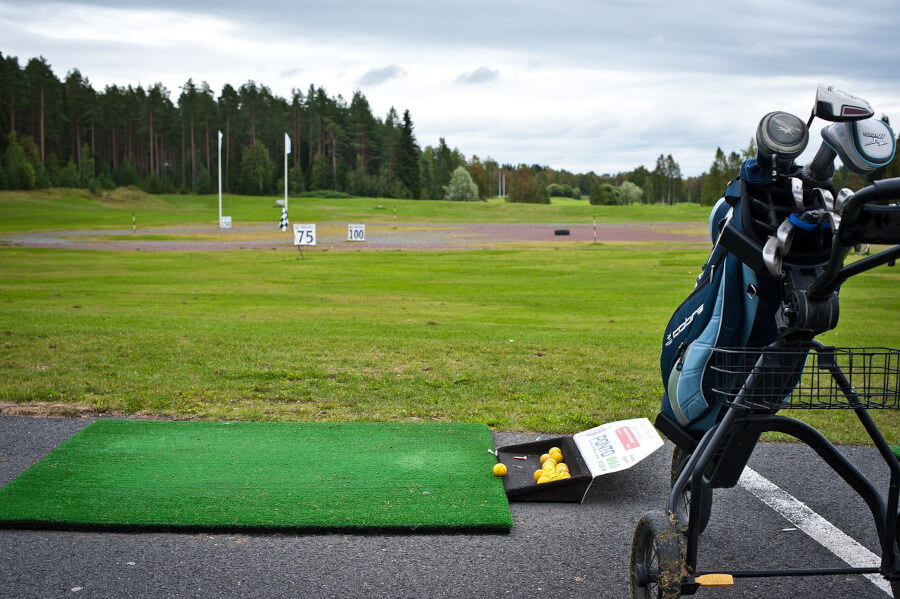
I really don’t mind if you like your 8 iron better than your pitching wedge; it doesn’t necessarily matter which club you start with, as long as it’s short.
When learning how to practice at the driving range, many amateurs miss the memo about stepping out on the tee and hitting driver after driver after driver.
Don’t do this.
Start with a shorter golf club that is easier to manage and will help you develop great tempo right from the start of your day.
I’ll also let you in on a little secret.
Shorter golf clubs are easier to release and square the club face, so if that’s something you struggle with, you will be off to a better start by using the shorter golf club.
Don’t Forget About Feedback Tools
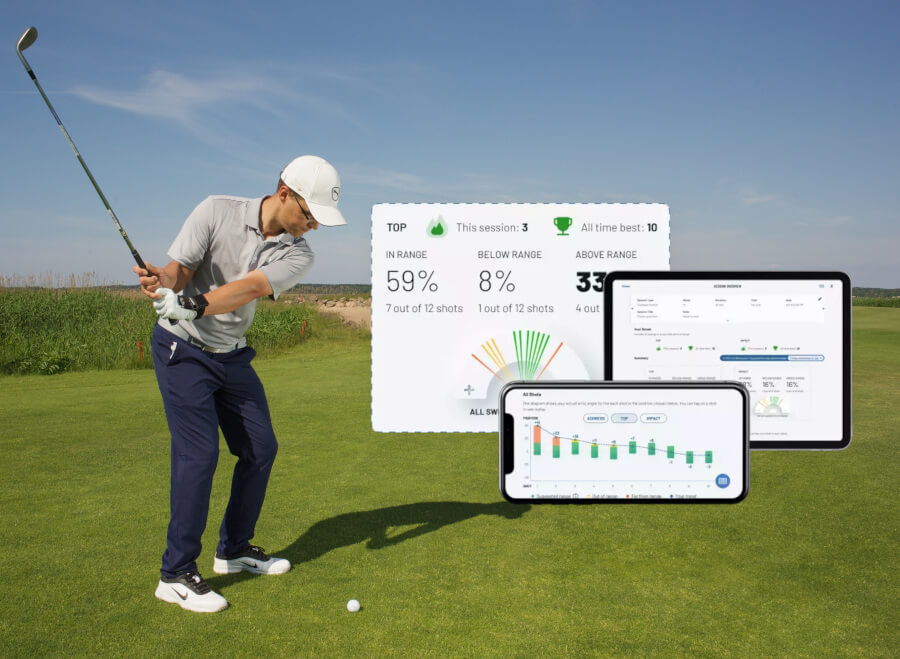
Golf feedback tools can make a big difference when it comes to the effectiveness of your practice on the range.
After all, how do you know if you are getting better?
For most golfers, it’s really hard to tell.
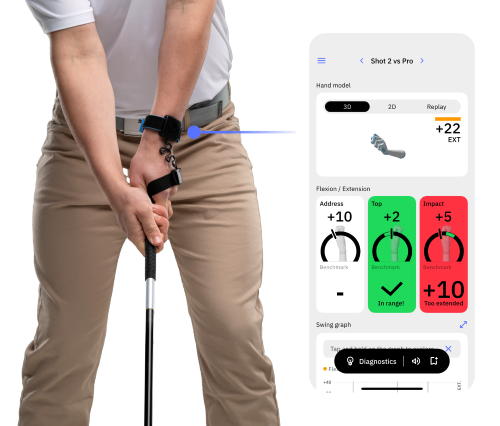
Golf feedback tools like HackMotion can give you an idea of whether or not your club is even in the right position while you practice. It’s entirely possible to practice the WRONG thing at the driving range.
Yes, you can walk away from a practice session as a less skilled golfer.
Don’t let this happen!
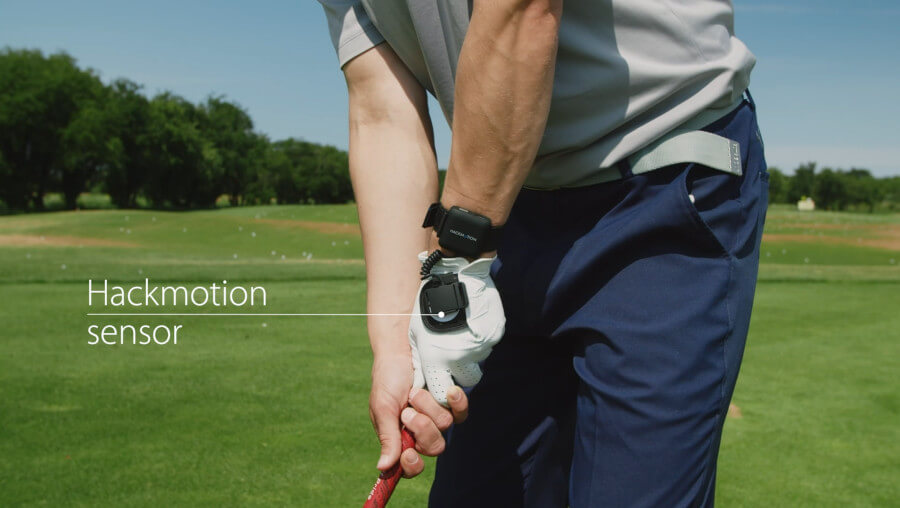
Feedback tools give you real-time information about what you are doing right (and wrong in your golf swing). With HackMotion, you will be notified with an audio signal of whether your wrist is in the correct position in your golf swing.
Practicing with a feedback tool like this greatly improves your ability to strike the ball with consistency and to take it out on the course with you.
If you aren’t practicing with a golf coach or teacher, use feedback tools to take their place.
Add Steps to Your Practice
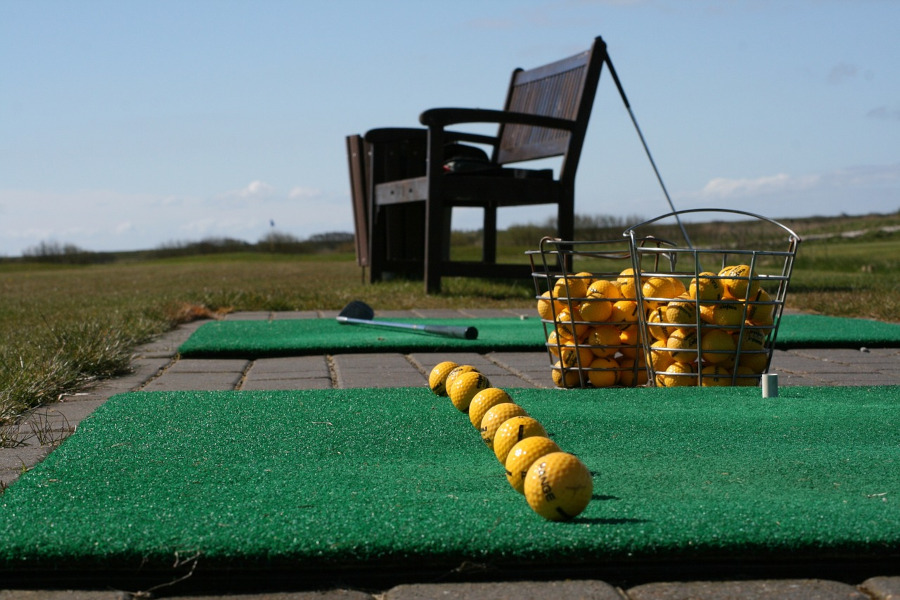
Have you ever been to one of those driving ranges where the golf ball is teed up for you? It comes out of the ground on a tee, and you don’t even need to put the golf ball on it?
Don’t let this ruin your practice routine.
When you practice, you need to move around and add some steps to your pedometer.
How many times on a golf course do you hit shot after shot after shot? Never!
So why would you practice this?
Hit a shot or two at the most, walk around a bit, and hit another one.
When I say to walk around, you may be able to do this simply by placing the driving range basket of golf balls just a few feet from you.
When I was a junior golfer, I practiced hard, and I had a coach come over once and take my basket of golf balls and place it 15 feet behind me.
At first, I thought it was a little ridiculous, but when I saw the impact it had on my results and the way it helped me focus my practice session, I quickly understood.
Make sure you are walking to get your next golf ball, even if it’s just five or six steps.
Pick a Target – Change the Club
One of the biggest differences between a decent golfer and a great golfer is their ability to hit different types of golf shots on the course.
Let’s say you can hit your 7 iron 150 yards. Can you also hit your 6 iron 150 yards? How about your 4 hybrid?
Many golfers only know how to max out yardage on each of their clubs, and this is a problem when trying to lower your scores. If you want to go low, you need to be able to control distance.
To practice this, I like to pick a target between 100 and 150 yards away. Usually, with these targets, you can use a variety of clubs to try and get the ball on the green.
Your full swing shot may be the easiest one to get on the green, but force yourself to work with ¾ and ½ swing golf shots as well.
Also, hit only one golf ball at a time with each club.
On the golf course, we only get one chance at a shot, so put the pressure on yourself to do the same while on the driving range; it will pay off.
Pick a Club – Change the Target
Now that you can hit your 7 iron any yardage your want, take that 7 iron and start hitting different targets.
In the last tip, I told you to stay with a single target and hit a bunch of shots.
Now I want you to pick a single club and change the target.
This is one of the best ways to practice aim. Many amateur players struggle with the aim on the golf course simply because they don’t practice it.
When you are changing your target from one shot to the next, you have to adjust your club head, your feet, legs, shoulders, etc. Keep changing the target, and your ability to hit targets on the course will greatly improve.
Remember that you can also pick target lines.
If a target is 250 yards away, you may not be able to hit it with your 7 iron, but you can check that your shot is on the proper line, and that’s what matters.

Play the Course at the Range
When learning how to practice at the driving range, you should quickly realize that the goal is to make the range as much like the course as possible.
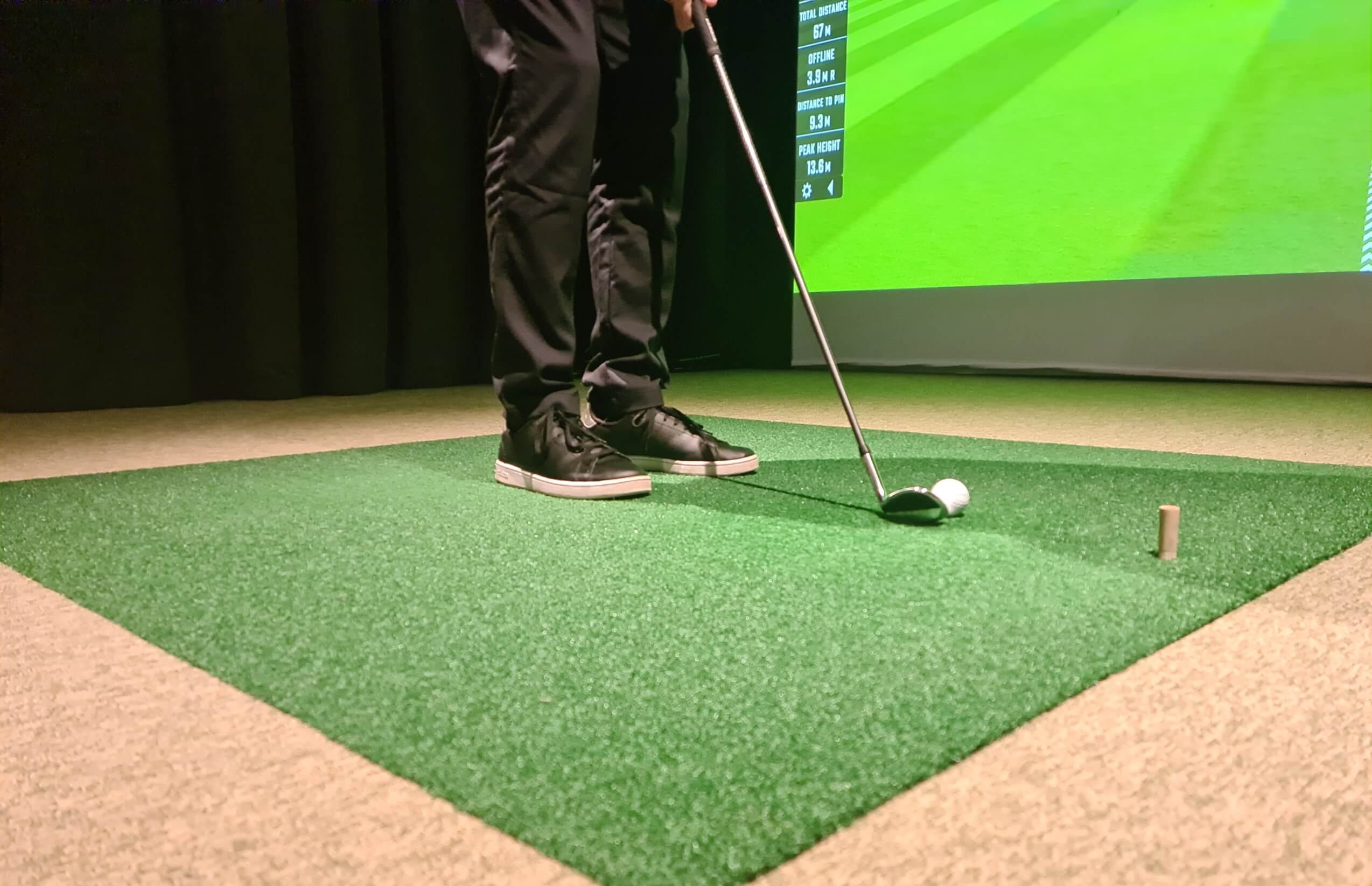
Of course, for some, this is easy with the use of golf simulators and golf technology, but the brain’s power is also enough to help you become better at practicing on the driving range.
Chances are you could play your home golf course in your sleep, so why not play it at the driving range?
Hit a driver, then an iron, a chip if needed.
Then go back to the driver.
Make it feel like you are practicing at a golf course, not just hitting golf ball after golf ball at the driving range. The variation in clubs is really great for your swing and your skill development.
Take a few steps between each shot and ensure you are always lining things up before you hit.
Don’t get sloppy with the speed of the routine, and your chances of success will be considerably higher.
Sometimes I like to look for a free golf GPS app or something similar where you can see the breakdown and yardage of each hole.
If you don’t have the entire course memorized, these visual representations are really helpful.
Use Technology to Help Improve Your Session
I already mentioned the use of feedback tools and training aids like HackMotion during your driving range practice session.
However, there are other ways to incorporate technology into your routine.
One of the most common is to use a portable golf launch monitor. Whether you are a 5 handicap or a 25 handicap, a launch monitor can give you detailed stats about your distance and spin rates.
Many amateur thin launch monitors are used for club fitting.
This is not their sole purpose.
Working with a launch monitor during your practice session could help ensure you stay on the right path.
The readout on the monitor is very simple, and you will start to determine which stats mean the most to you.
I love the launch monitor concept when practicing tip number 6.
Remember, this one dealt with picking a target and changing the club. The launch monitor ensures you are hitting the clubs you want a variety of different distances.
Distance control can really be a difficult concept to learn and practice.
By using technology, you will get it down much quicker, and then you will have golf stats to look back at documenting your session.
Always do the Pre Shot Routine
Finally, one of my favorite tips for the driving range tips of all time is to always practice using your pre-shot routine.
The pre-shot routine helps your mind know that you are ready to hit a shot.
Let’s say you are working on releasing the club, improving wrist action, and fixing your slice.
There are certain things you are trying to do throughout your swing that allow this to happen.
Go through your pre-shot routine, think about what you are working on, and make the shot.
When you head back out to the golf course, you will be able to do the same exact thing and expect the SAME results.
Trust me, if you stand there and just fire away, hitting shot after shot, you won’t be practicing anything that you can take to the golf course with you.
Essentially you will just waste your time practicing.
FAQs
Driving range tips for beginners and those for more accomplished players are really similar.
Both groups of golfers need to maximize the efficiency of the time spent on the range and then carry it over to the course.
Is the driving range good for practice?
The driving range can be great for practice if you are smart about setting up a practice area, warming up, using golf technology, and ensuring that you make the range as much like the course as possible.
How long should you practice at the driving range?
Many golfers find a ½ hour of practice to be enough. Better players often have more stamina and can practice for an hour or more and still benefit from it.
Most times, you will start to feel tired or have some soreness if you practice too long, so this should be avoided.
What should you not do at the range?
When hitting golf balls at the range, never start with the driver. In addition, never hit driver after driver until you run through a bucket of golf balls.
The range should be more of a practice for the course instead of just a session where you swing the club over and over.
Why is it easier to hit at the driving range?
You may feel less pressure to hit a perfect shot at the driving range.
If you find this is the case, you should learn how to increase pressure at the range by playing games and setting up challenges for yourself.
This process puts pressure on and makes it easier to perform on the course.
How many balls should I hit at the practice range?
Hitting about 50 golf balls should be the minimum when you have a practice session; the first ten shots and the last ten shots should be chipping and short game practice.
This leaves thirty shots in the middle to work on the things you need to.
How do you practice effectively at the driving range?
Practice effectively at the driving range by ensuring your practice is modeled after the golf course.
Practice one shot at a time and make it count; it will pay off when you head to the course to play.
What should a beginner practice at a driving range?
Beginners should practice setup and hitting a golf ball straight when they are at the driving range.
In the beginning, it’s hard to hit a golf shot straight and get it up in the air.
Make sure you are balanced, your grip is correct, and you are aiming at a target.
How often should I practice at the driving range?
If you play golf twice weekly, make sure to have at least one or two practice sessions in addition to your rounds.
When you can practice more often, it will only help your rounds of golf be more consistent.
What clubs should I practice with at the driving range?
Try to practice with a variety of clubs on the driving range. Bring a wedge, a mid iron, a fairway wood (or hybrid), and your driver.
If you have some time, it’s smart to get a little putting practice in as well.
Final Thoughts
If you are going to invest the time to practice golf at the driving range, you might as well do it right.
So many golfers practice ineffectively, and it leaves them feeling as though they can’t make progress.
Make every shot count, slow your practice down, and use tools like HackMotion to take your game to the next level.