How to Put Backspin on a Golf Ball – The Essential Guide & Drills

Have you watched professionals hit a shot into a green that stops exactly where it lands or even backs up a few feet? That’s backspin, and it’s a skill you will want to have in your golf game.
When learning how to put backspin on a golf ball, you need to make sure the conditions are correct, but your technique also has to be optimized. I’ll show you what it takes to get backspin and help you troubleshoot why you might not be getting any right now.
Key Takeaways
If you don’t have time to read our entire guide on how to put backspin on a ball, here are the key factors that you need to know.
- To put backspin on a ball you need clean grooves on the club to improve the interaction with the golf clubface and the ball.
- The angle of attack and lead wrist position have to allow you to hit down and through the shot in order to get the ball spinning backward.
- The golf ball and wedges you use will impact your ability to generate backspin.
- Anytime you are able to drive through a golf shot with consistent speed and rotation, it’s easier to generate backspin; this is why faster swing speed players can generate quite a bit of spin.
Contents
How to Create Backspin On Golf Ball – In Short
To get backspin on a ball, you want a clean clubface, a clean golf ball, and a lie in the shorter grass. As you come through the golf ball, you will need to strike it at a descending angle with a good amount of clubhead speed. The idea is to keep the club moving through impact to maximize friction between the face of the club and the dimples on the golf ball.
What is Backspin?
Backspin can be understood by thinking about a golf ball spinning in reverse as it flies. The ball travels forward, but as it travels, it spins backwards. The more backspin a ball carries, the shorter it travels and the softer it lands. That’s ideal for short game shots where you aim to attack the flag and stop the ball near your target.
Golfers with excessive backspin landing on soft greens may spin backward, but for most amateurs, the ball bites rapidly.
What Causes Backspin on a Golf Ball?
USGA Equipment Standards Manager Jim Hubbel explains that backspin is created by the ball sliding off the clubface and frictional force. While the ball slides off the clubface, the force of the friction opposes that motion, pushing downwards on the ball.
The result is higher backspin rpm and a soft landing on approach.
Why Do You Need Backspin?
You need backspin to help you control the golf ball around the green to attack flagsticks and get up and down. Without backspin, your ball lands and rolls forward a few feet, which may leave you with a testing putt.
Increased backspin on short game shots allows you to fly the ball at the pin with the confidence that the ball bites rapidly and leaves a short putt.
The bottom line here: backspin gives you control.
How to Get Backspin on Golf Ball
Here are the basic steps for getting backspin on a golf ball. Chances are, many of these steps are things that you are already doing in your golf game. Take a look to see where the disconnect may be, making it difficult for you to generate spin.
1. Clean and Dry Grooves
Before I get technical, let’s start with equipment basics. Your grooves must be clean, dry, and operational to achieve spin.
When your wedge grooves are dirty or covered in moisture, you can’t make clean contact with the golf ball, reducing friction and backspin.
Wipe your grooves before and after each shot to dislodge any mud or debris from the cracks. I recommend carrying a damp and dry towel to remove unwanted moisture. Old wedges with withered grooves will also struggle to generate meaningful backspin, reducing your control.
2. Pick the Right Golf Ball
In addition to having clean grooves, you will want to put the correct golf ball into play. Something like a Titleist Pro V1 or a Callaway Chrome Soft will make it much easier for you to generate spin than a golf ball with only two pieces like the Callaway Supersoft.
The basic rule of thumb here is that premium golf balls generate more spin.
3. Position the Ball Front of Center
Place the ball in the front or center of your stance to give yourself time to get the shaft straight at contact and to allow you to deloft the clubface.
I find placing the ball forward of the center also helps me rotate through impact to keep the loft on the clubface during the upswing.
When I sit the ball too far back in the stance, I risk striking the ball with a delofted clubface, taking spin off the golf ball. I also find that a ball too far in the back of the stance complicates my ability to rotate through the impact and drive the clubface under the ball.
4. Open Your Stance
I follow the same approach as Rickie Fowler when trying to create backspin. I open my stance to the target. This means my feet aim to the right of my intended target, which I do to account for my added rotation around the lead leg through impact.
When I set up square to the target, I feel awkward, and I’m unable to produce that added rotation, which helps me keep the clubface open and drive it under the golf ball.
Of course, this is for shorter shots around the greens.
You can still generate backspin on full swing approach shots and have a square stance. However, your backspin rates may just be a little lower.
5. Open Clubface at Address
You want to deloft the clubface leading into contact, and setting up with an open face readies you to execute your high-spinning shot.
I find the open clubface also helps me visualize where I want my clubface before impact to get under the ball and increase friction. An open clubface should help increase the overall height of the shot and actually increase the ball’s ability to stop on the green.
6. More Weight on Lead Leg
The ultimate goal in your backspin quest is to get the ball sliding off the clubface and increase the frictional force. I find placing approximately 55% of my weight on my lead leg helps me drive the club under the ball to create the friction needed for increased backspin.
On really short shots closer to the green, I may even put 65% of my weight on the lead leg.
Avoid leaning back to help your club under the ball because you will set yourself up to top your shot. Keep the shaft vertical and keep marginally more weight on your front leg.
Read More: The 13 Best Golf Swing Tips
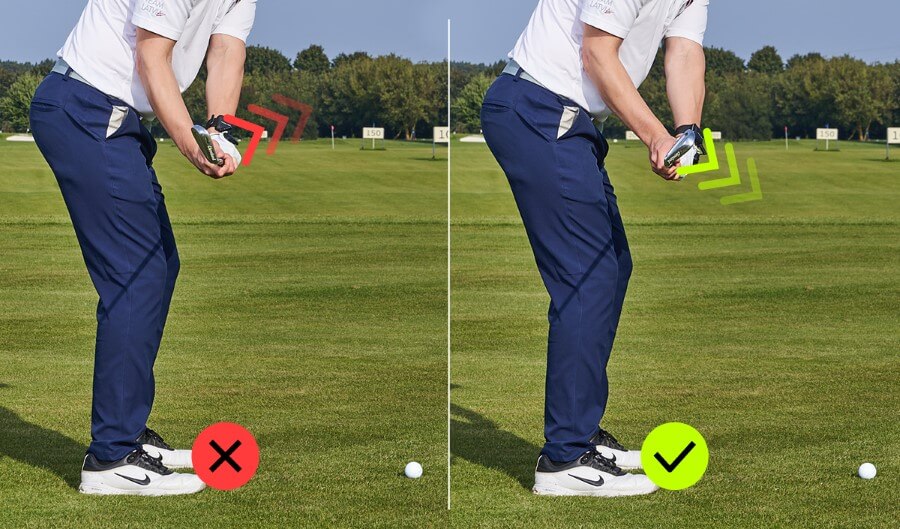
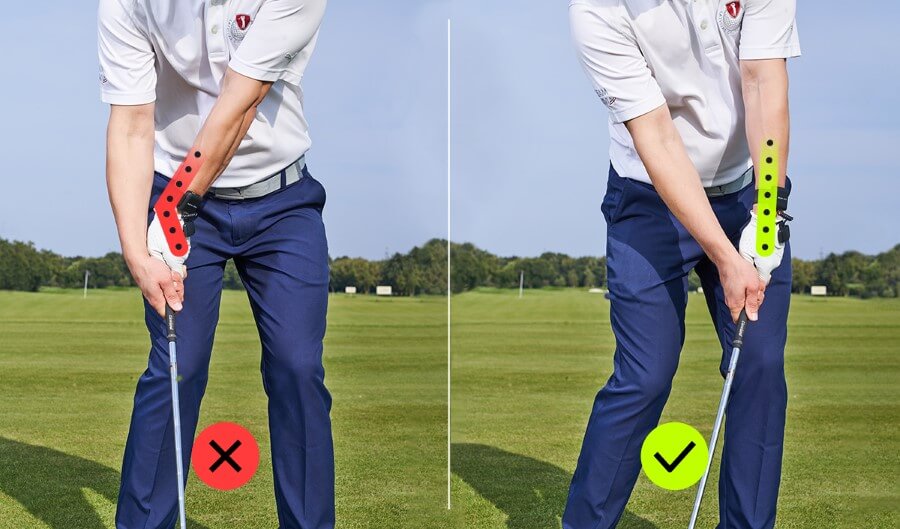
7. Cupped Wrist Leading into Impact
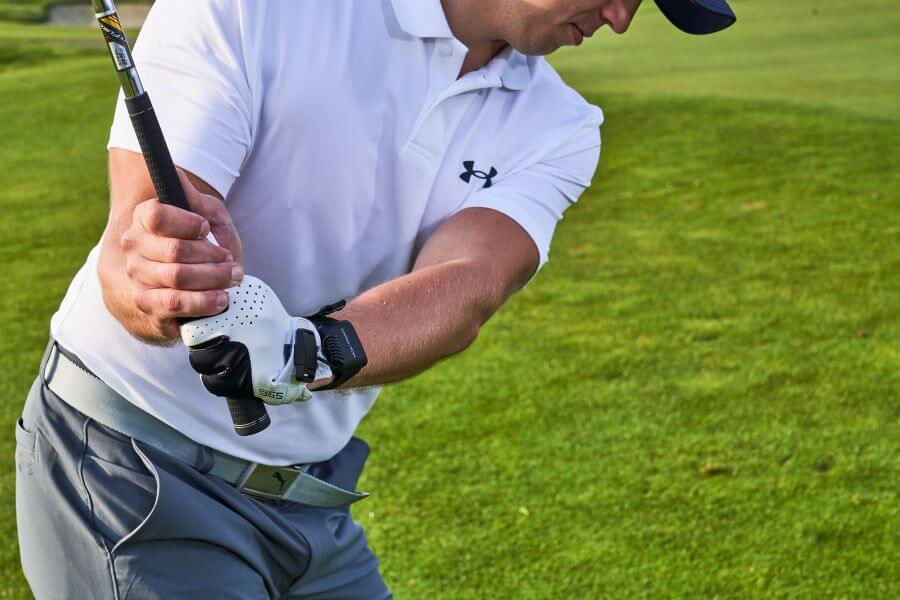
I’ve been using the HackMotion sensor religiously this year to predominantly improve my long-game compression. However, it’s also helped me identify the impact of cupping my wrist vs flexing them before contact.
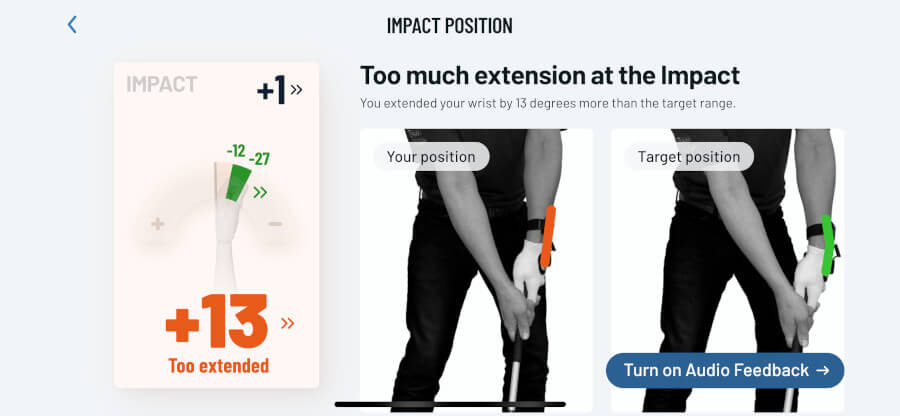
Cupping or extending my wrists helps me steepen the shaft and open the clubface to strike the ball cleanly with the grooves and generate spin. Whenever I review my data from a shot with minimal spin, the result is often greater wrist flexion. This wrist action closes and delofts the clubface, taking spin off the golf ball.
The sensor feeds data to my mobile device, and I can view the metrics from my shot in real-time. It helps to playback your shot and watch your wrist movement from address through impact. Take note of the wrist positions and adjust accordingly to produce some extension into contact.
Too much extension through impact can create issues in your game, and HackMotion helps me stay on track with where my wrist should be through impact. Remember that proper wrist position and angle is a range; it’s not necessarily going to be one specific number.

Find out how mastering wrist mechanics can improve your golf swing.
8. Rotate Around Lead Leg
More words of wisdom from Rick Shiels reveal that you should rotate around your lead leg through impact. This motion keeps your clubhead driving under your golf ball, ensuring the face remains delofted for the duration of your upswing.
When I stop rotating around my left leg, I’m unable to gather sufficient momentum to slide the clubface under the ball and make clean contact. Instead, the lack of turn causes me to catch the ball thin and send the ball flying across the green.
Drills to Help You Create More Backspin on the Golf Ball
One of the best ways to get out there and learn to generate backspin on your golf ball is to use practice drills. These are a few of the drills that I have had the most success with through the years.
Tee Drill
A simple drill you can undertake is the tee drill, designed to help you get the club under the ball for a clean strike. Place 1 peg in the ground an inch behind the ball and set up for your shot.
The aim is for your club head to hit the turf ahead of the back tee, which leads to a cleanly struck shot with optimal friction and spin.
If you hit behind the tee, your clubhead will likely pop up off the deck, causing you to top your shot.
The tee drill helps you narrow down your contact point with the golf ball and strike it in that back lower corner.
HackMotion Wrist Sensor
The HackMotion wrist sensor is a versatile device that has helped me improve my putting stroke consistency, long-game distance, and accuracy. It’s also effective in training wrist angles to help you get backspin on a golf ball.
If you prefer a more budget-friendly option, the HackMotion Core is all you need to optimize your wrist extension into and through impact. I will hit 20 sand or lob wedge shots and strive to achieve a minor degree of extension through the golf swing to help improve the angle of attack.
I find that consistently using the HackMotion data as a guide has helped me produce more consistent short-game spin.
Discover how right wrist action can help you get more spin on your golf ball.
Half Swing Drill
The video below will give you a better idea of how to do this drill, but it is one of the most effective ways to learn how to get backspin on the ball. At first, you will be a little discouraged by how hard it is to get the golf ball up in the air.
However, if you continue to practice these one-handed swings and start to understand what it takes to get your wedge to go down and up in this motion, then you will find it much easier to add backspin to a golf ball on the course.
My favorite trick here is to keep the lead leg slightly forward of the trail leg; it helps promote the rotation around that leg.
FAQs
Is it difficult to generate backspin on a golf ball?
No, it’s not difficult to generate backspin on a golf ball. All golfers produce an element of backspin on every shot. However, the quantity of backspin and your ability to control it is where the challenge comes in for amateurs.
Does wind make a difference to backspin?
Yes, the wind does make a difference to backspin because the ball spins more into the wind and less on shots traveling with the wind.
How can I practice getting backspin at the driving range?
Use the HackMotion sensor to improve wrist extension into impact to consistently slide the clubface under the ball. I also suggest using the tee drill and one-handed swings to promote clean contact with the golf ball on every shot.
What factors impact the amount of backspin you can generate?
In addition to ensuring you have the proper angle of attack on your golf ball, it’s also essential to play with the proper equipment (golf ball and wedge) and to make sure your lie sets you up for spin. The less debris there is between the clubface and the golf ball, the easier it is to spin. Clean lies from the fairway are ideas for generating backspin.
What distance is easiest for practicing backspin?
Short shots from 20 to 30 yards are the easiest for practicing backspin because of the weak lofted clubs you use and their shorter shafts, which are easier to control. Start close and move farther away as you improve your consistency. As you improve, try from farther away.
How do you control backspin?
I control backspin by adjusting the loft on my clubface and wrist angles into impact. When I want to increase backspin, I extend my wrists into contact and open the clubface to weaken the loft.
However, I deliver less spin by producing more flexion than previously to shallow the shaft and deloft the golf club.
Final Thoughts
After reading our detailed guide, you now know how to put backspin on a golf ball.
An open clubface at contact that slides under the ball is your ultimate goal in boosting backspin. This is best achieved by extending your wrist on the downswing to steepen the shaft and open the clubface.
The HackMotion offers the most clarity and understanding on wrist positions from address through impact. I find it’s helped improve my contact, friction, and backspin for more consistency on wedge shots.