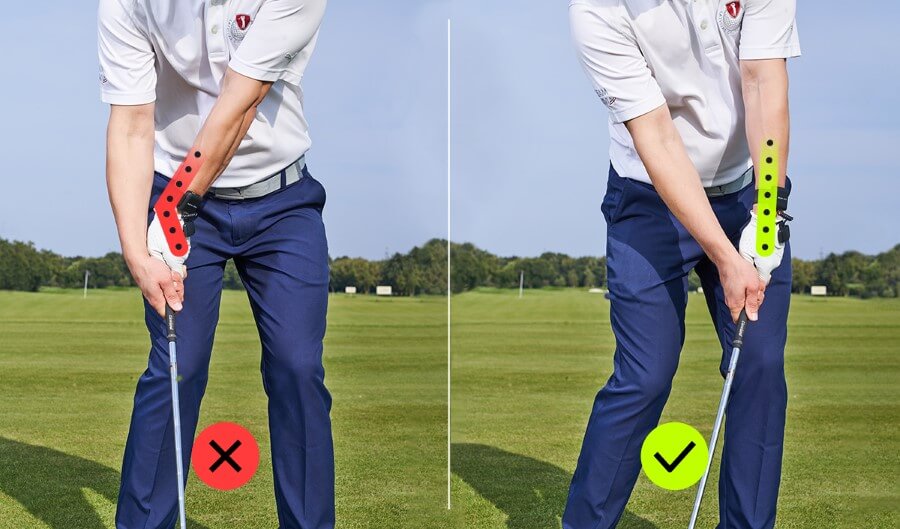
Actionable Tips & Drills to Fix the Over the Top Golf Swing

As a junior, I struggled with swinging over the top, causing most of my shots to curve from left to right. I solved the issue by reducing grip pressure, shortening my backswing, and developing a single-plane swing.
In this post, I offer 8 tips to fix the over the top golf swing and get you hitting straighter and cleaner.
I’ll also provide 5 basic drills that I execute on the driving range, which help me reduce the risk of casting my golf club. You’ll also learn how wrist flexion and extension impact your swing path, clubface angle, and shot shape.
How Can You Stop Coming Over the Top? (Quick Answer)
You fix an over the top golf swing by reducing grip pressure, shortening the backswing, shifting weight towards the target, and increasing wrist flex on the downswing.
Contents
What is Coming Over the Top in a Golf Swing?
Coming over the top refers to the action of taking the club outside of the golf ball and swinging on an inside path down to impact.
This often causes amateur golfers to strike the ball with a clubface open to the swing path, leading to a left-to-right shaped shot.
Read More: Common Golf Swing Mistakes & Their Simple Fixes
What Causes an Over the Top Golf Swing?
Chris Ryan explains that an over the top golf swing is caused by over-extended wrists, poor body pivot, or internal trail arm rotation.
Wrist Extension
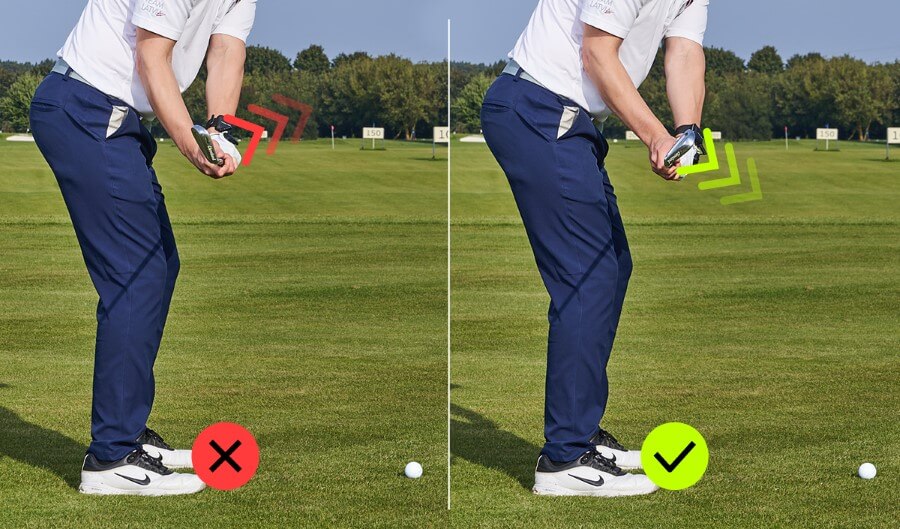
Using data from the HackMotion sensor, I’ve found excess wrist extension at the top as my reason for coming over the top. Occasionally, I produce more wrist extension than I had at address, causing the clubface to open at the top. I then try to correct the position by pushing the club outwards and swinging inside.
Poor Body Pivot
Amateurs also struggle with inefficient weight transfer from the top of the swing. The goal is to shift your weight forward towards the target, starting with your hips.
However, I often see amateurs generate minimal lower body rotation, causing them to rely on their arms and shoulders.
Without rotation, the only way to get the clubface down to the ball is to push the golf club outwards and swing it inside. Ryan (in video above) explains that his students occasionally find themselves shifting their hips away from the target, making it impossible to swing outside in. Instead, the response is to cast the club out and in.
Internal Trail Arm Rotation
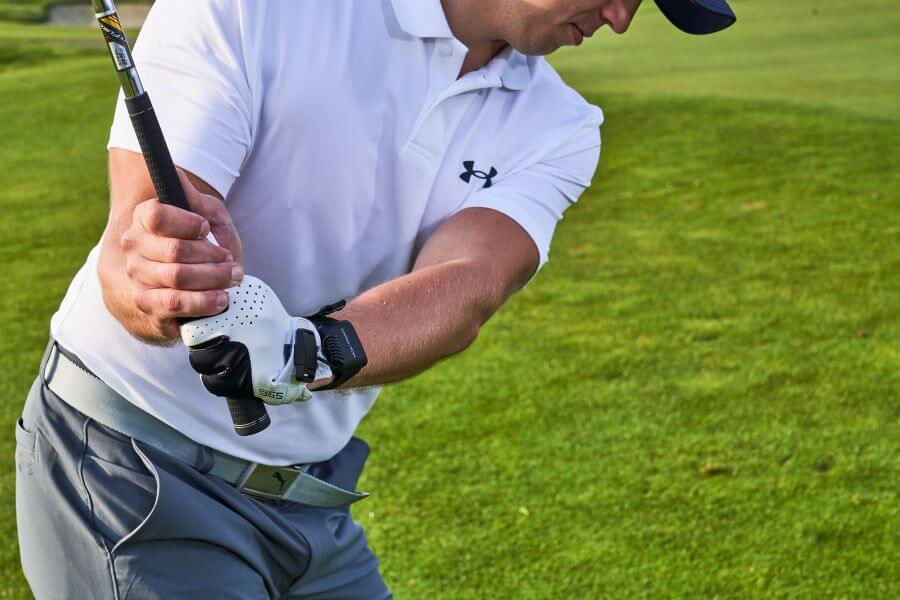
I generate wrist supination towards the top of the swing to help me externally rotate my trail arm. As a right-hander, that is my right arm. If I remove a club from my hand at the top of the backswing, my palm faces the sky.
Keeping my arm in this position will help me drop the club into place, shallow the shaft, and square the clubface into contact.
As long as my hip rotation and shoulder turn are efficient. However, if my wrists rotate in a pronation direction, my palm faces the turf, causing the club to come over the top and inside on the downswing.

Find out how mastering wrist mechanics can improve your golf swing.
How to Stop Coming Over the Top?
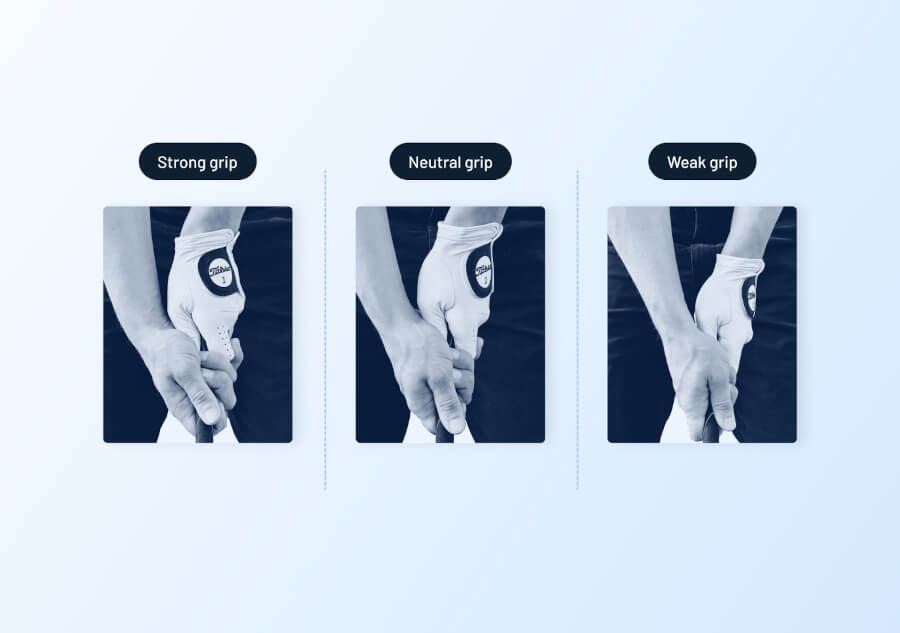
1. Neutral Grip Strength
Reducing grip pressure was the first step to fixing my over the top golf swing. I used to strangle the golf club to try to improve my control, but it tensed up my arms and shoulders and hampered my wind up on the backswing.
To make up for the loss of energy build-up, I increased my backswing, rushed the transition, and tried to swing faster.
The result was inconsistent mechanics, wrist control, and body pivot, often sending my golf club on and out to in path on the downswing.
As Brandon Steele explains, less grip pressure gives you more control of the clubface and your overall swing.
2. More Upright Posture
Golf coach Brian Fitzgerald compares the ideal golf shot posture to the setup for jumping into a swimming pool.
Start from an upright position, bend your spine slightly, and flex your knees. Now you have an optimal range of motion on the swing and can get your club head to the desired position at the top.
I’ve been guilty of hunching over the ball, which limited my ability to take the club inside toward the top.
Instead, I took the club back and up. The only solution from here was to cast my club over the top and swing inside to try and make clean contact with the golf ball.
3. Clubface Square to the Target
I’ve added alignment in because I consistently notice incorrect alignment by amateurs, setting up for failure from address.
Ensure your clubface is square to your desired target to encourage straight golf ball flight and improved accuracy.
Set up, with your feet parallel to the intended target to promote a consistent outwards path through impact. In my case, aiming left of the target and opening my stance can be problematic because it’s a challenge getting my club inside at the top and shallow the shaft on the downswing.
When I struggled to shift my lower body weight, my arms would take over, and I’d create wrist pronation, sending the clubface over the top and down. I would’ve managed to optimize my rotation had I set up square to the target.
4. Wrist Supination at the Top
You must produce positive wrist rotation to position yourself perfectly to drop the club into place on the downswing and shallow the shaft before impact. When your wrist rotates in a supination direction, it causes the palm to face the sky.
Reaching supination at the top of your backswing means you’ve gotten the clubhead inside and are well-placed to deliver a clean, accurate strike. However, when your trail wrist rotates in a pronation direction, it pushes the club out at the top, and players typically swing down and inside.
Pronation rotation sees your palm facing toward the ground, causing a steep shaft and angle of attack from the outside in.
5. Shorten Your Backswing
Beginners struggling to understand the complexities of golf swing mechanics may opt for a more effortless solution of shortening the backswing.
I’ve employed this tactic in my game on a full-time basis, and it works wonders for a consistent plane, swing path, and accuracy.
My problem in the past was overswinging on the backswing to maximize my wind-up and power. Unfortunately, inconsistent hip rotation, shoulder turn, and wrist control sent me swinging over the top on multiple occasions.
Now, I don’t swing more than ¾ on every swing, which helps me reach the intended target at the top, and makes it easier to unload on the downswing. Although it costs me distance, I’ll take the accuracy any day.
6. Shift Weight Towards the Target
The transition from the top of your backswing down is vital for power and achieving the desired swing path. Initiate your downswing by shifting your weight from your trail leg forward to create momentum and lag for increased power leading into contact, as highlighted by Chris Ryan in the video below.
I find it’s far easier to square the clubface up and generate the necessary velocity from this position. Commencing the downswing by shifting your weight helps you drop the clubhead into place, shallow the shaft, and swing from the inside out.
With limited hip rotation and shifting the weight from the back forwards, you leave your arms and shoulders to do the work.
In my experience, you’re stuck only managing to cast the golf club outwards and inside to try and generate power and speed while giving your face a chance of striking the golf ball.
7. Increase Wrist Flexion Leading Into Impact
An open clubface at the top of the swing often causes the player to produce an over the top golf swing, keeping the clubface open to the path at impact. I lower the risk of slicing my shots by increasing my wrist flexion on the downswing relative to my address position.
According to my data from the HackMotion analysis, the straightest shot I hit in my last range session saw me address the ball with 12 degrees of extension. I reached 7 degrees of extension at the top before flexing my wrists on the downswing and producing 2 degrees of flex.
By flexing my wrists, I could shallow the shaft on the downswing and close the clubface relative to my path.
This promotes an inside-to-out swing path, simplifying the task of squaring the clubface at contact to deliver straighter flight. The delofted clubface also boosts compression to reduce spin and accelerate ball speed.
8. Turn Your Shoulders Through Impact
Your final job is to keep turning your shoulders on the downswing to maximize lag, power, and clubhead speed. You also need to keep turning your shoulders through impact to help you square the clubface to launch a straight flying ball.
Failure to employ enough shoulder turn causes you to lose power and velocity, rendering it challenging to square your clubface at contact.
When I stop turning my shoulders through impact, it typically leaves me open to the target, which risks me leaving the clubface open and pushing it to the right of the target.
Drills to Help You Stop Coming Over the Top
Smash Drill
I learned the smash drill from Chris Ryan, which helps change the primary direction of the golf club on the downswing. It’s intended to prevent casting and promotes coming down and outwards to maximum speed, which allows you to square the clubface.
Place a soft shell a foot behind the impact zone, and take a backswing before pausing at the top. From the top, I want you to start the downswing by shifting the weight of your trail leg forward and using the momentum to drop the club into place and shallow it on the downswing.
Let the club drop down and into the bag, and repeat the process. You want to ensure that the club is coming straight down and not heading outside to inside.
2. Headcover Drill
The headcover drill helps me immediately determine when I am swinging from outside to in. I place the head cover of my driver a couple of inches outside my ball and take a few swings with a ball set up.
If my clubface strikes the headcover, it means my clubface is traveling from the outside inwards. I then employ the No-Turn Backswing drill and force myself to produce a shallow shaft and swing inside-outwards path to prevent coming over the top and risking a slice.
In addition, I focus on initiating the transition from the top down by shifting my lower body weight toward the target.
The momentum this generates then helps me turn my shoulders through impact, producing substantial lag, power, and clubface control into contact.
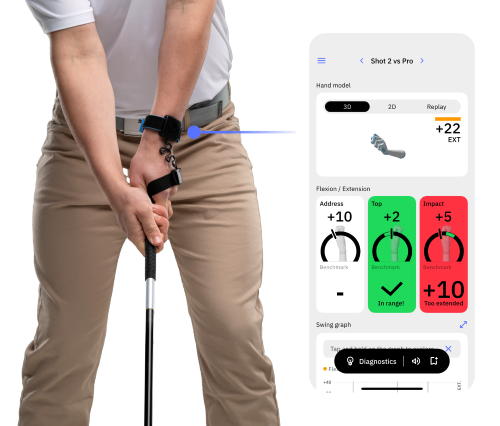
3. HackMotion Target Wrist Positions
The HackMotion guides you to achieve optimal wrist positions at the top of the swing and impact. I use the HackMotion sensor on the range combined with the application to minimize my wrist extension at the top and at impact.
Thanks to the feedback on the app, I instantly know when I’ve created excess wrist extension at the top of my swing. The increased extension causes my clubface to open at the top, one of the over the top golf swing causes.
With the guidance of the sensor, I focus on achieving more wrist flex through the swing than I had at address for improved clubface control.
4. No Turn Backswing
I’ve been using Martin Chuck’s No Turn Backswing recently to enhance my rotation and wrist angles on the downswing. I address the ball and lift the club before tilting it backward by 45 degrees. Then I turn my shoulders and take the clubhead back to the top of the swing before initiating my downswing.
Admittedly, you feel like you’ll worsen your over the top swing from your backswing position. However, it forces you to shift your weight smoothly from the back leg to the front and turn your shoulders optimally.
By continuously working on your rotation, you start fixing your over the top golf swing and enhancing hip rotation and shoulder turn. This encourages a consistent in-to-out path better equipped to square the clubface at contact.
5. Under the Bridge
You can work on “Under the Bridge” from anywhere which is why I love it. Grab a club and keep the shaft upright while resting your left hand on the top of the grip. Assume your standard posture, and take a swing with your trail hand, the right one for right-handers.
I do repetitions of 15 to 20 at a time, getting used to the rhythm, tempo, and consistency of the swing. My right hand goes back to the top and comes down, under my left arm, and through, hence the name of the drill.
Consistently practicing the “Under The Bridge” drill made shallowing my shaft and swinging inside-outwards second nature.
Final Thoughts
The over the top golf swing is a menace for amateur golfers and often proceeds to induce slices and erratic shots.
However, our 13 tips and drills will guide you to eradicating the over the top golf swing from your game.
Remember to employ neutral grip pressure, a moderately upright posture, and wrist supination at the top of the swing. From there, shift your lower body weight towards the target, increase wrist flexion, and turn your shoulders through impact for an accurate, powerful strike.
Leverage the tutorials, guidance, and real-time analytics provided by HackMotion to better control your wrist angles and the clubface to eliminate over the top swings.